Rust Anti Raid Sky Settlement Explained
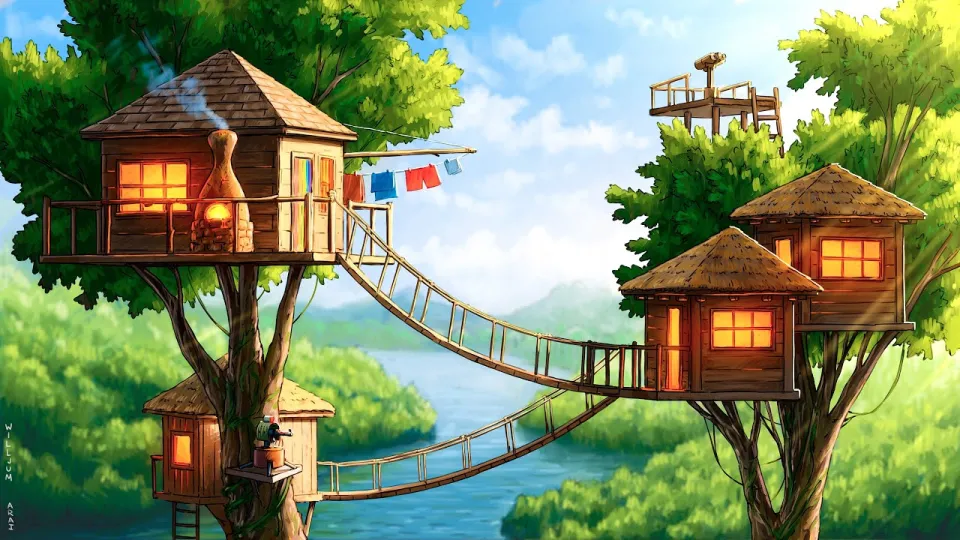
Video: I Built an anti raid sky settlement in Rust...
Need articles like this for your video? They help promote it on YouTube and Google — order them in the Telegram bot @sat_sit_bot. Articles with your video embedded are written and posted by the bot itself — on popular topical sites (no ads). Try it free: 50 articles on us.
· based on the channel Willjum
Key takeaways
- A sky settlement in Rust is a base built high above terrain on player-made towers or floating foundations, so raiders cannot reach it by ladder or simple ground push.
- The core defence is vertical: every extra metre of height adds rockets, C4 or building effort before a raid team can even touch the loot room.
- Rust's building stability rules cap how far a structure can extend upward, so the tower base must be engineered with proper supports rather than stacked blindly.
- The design trades convenience for security: long climbs, fall damage and exposed staircases are the price of making a raid expensive.
- Floating or high-rise bases are most effective on solo and small-group servers, where raid teams rarely bring the resources for a full vertical push.
A sky settlement in Rust is a base built high above the ground on player-made towers or floating foundations, designed so raiders cannot simply ladder up, door-camp, or push through a ground-level entrance. The idea is to turn every raid into a vertical siege that costs more rockets, more C4 and far more time than the loot inside is worth. Willjum's build video walks through exactly this concept, and players who want to see the full run can support the creator through Patreon, where the channel's bonus content and behind-the-scenes material live.
Rust rewards patience and preparation over raw aim, and base design is where that shows most clearly. A sky settlement is not a magic shield — it is a cost multiplier. The sections below break down how the structure works, what it demands from the builder, and where it still leaks.
Why height is the strongest wall in Rust
Height is the one defence in Rust that cannot be brute-forced with a single tool; raiders must either climb, fly or spend explosives on the structure itself. A ground base can be entered with a ladder, a few satchels and a lucky door, while a tower base forces the attacking group to commit to a full plan.
Three practical effects come with altitude:
- Ladder raids stop working. Raiders need external stairs, a helicopter, or a climb that leaves them exposed and without cover.
- Explosive cost rises sharply. Reaching a loot room at the top means blowing through multiple floors, and each floor is a separate expense.
- Fall damage becomes a defender's tool. Anyone who breaks in and drops down usually loses health, and anyone pushed off the edge loses the fight entirely.
The trade-off is that the defender also lives with those stairs. Every trip to a monument, every furnace run and every scrap haul happens at the top of a climb, and that friction is real on a busy wipe.
How a sky settlement is actually built
A sky settlement works because Rust's building system allows vertical extension as long as stability holds, so the builder engineers a tower first and the living space second. The base is a support problem before it is a decoration problem.
- Start with a compact footprint. A narrow tower with strong foundations is easier to stabilise than a wide platform, and it presents fewer walls to the outside.
- Build upward in stages. Each floor should be planned with its own purpose: crafting and storage low, sleeping bags and a respawn point mid-way, the loot room at the top.
- Protect the staircase. The climb is the weakest link. A single exposed ladder or open stair shaft lets a raider skip the entire vertical grind.
- Keep the top small. A cramped loot room with one entrance is far easier to defend than an open rooftop with multiple angles.
- Plan the exit. A window, a drop point or a secondary route matters when the only door is at the bottom of the tower.
On vanilla servers the material cost is the real limiter. Stone and metal frags add up quickly across several floors, and a solo player will usually finish the shell long before the interior is fully upgraded.
Anti raid tricks that make the climb expensive
The anti raid value of a sky settlement comes from layering small obstacles, not from one impenetrable wall. Raiders who expect a straight push up a staircase should find a structure that punishes every step.
Useful patterns include:
- Fake floors and dead ends that force raiders to spend explosives on empty rooms.
- Multiple loot stashes so a single breach does not end the wipe.
- Shotgun traps and turrets covering the staircase, the most common approach route.
- Doors placed at odd heights so a raider cannot simply walk a ladder to the loot.
- A separate, cheaper decoy base on the ground that absorbs attention and raid resources.
None of this is unique to sky bases, but altitude multiplies the effect: every trap the raider triggers happens while they are exposed on a narrow climb with no easy retreat.
The weaknesses nobody talks about
A sky settlement is not raid-proof, and treating it as such is how players lose their whole wipe in one night. Experienced raid groups bring rockets, a helicopter and patience, and a tall tower with a single support line is a very attractive target.
Key failure points:
- Structure collapse. Destroy the right foundations and the whole settlement comes down, loot included.
- Helicopter and balloon entries. Altitude does not stop a determined group from landing on the roof.
- Resource drain on the owner. Long climbs slow down every farming run, which means fewer materials for upkeep and defence.
- Upkeep costs. A multi-floor base on a vanilla server demands regular material payments, and missing upkeep can decay the whole structure.
- Visibility. A tower is visible from a distance, and visibility invites attention.
The honest verdict is that a sky settlement is a strong solo and small-group design against opportunistic raiders, and a moderate obstacle for organised clans with a full raid budget.
Common questions from players who never touched Rust
A large share of the audience for these survival videos has never launched the game, which makes base-building explanations the most requested part of any story. The recurring doubts are practical rather than technical.
- Is a sky base only for big groups? No. It is arguably better for solo players, because it converts a numbers disadvantage into a height and cost advantage.
- Does it need modded servers? Not necessarily. Vanilla Rust allows tall builds within stability limits; modded servers simply make the material cost easier to absorb.
- How long does it take to build? A functional shell can go up in a few hours of farming, while a fully trapped and upgraded settlement is a multi-day project.
- What happens after a raid? Most players keep a small hidden stash or a second base, because no single structure survives a dedicated raid group indefinitely.
Useful links
- Willjum on Patreon — bonus content and direct support for the channel.
- Willjum on Twitch — live survival streams and base-building sessions.
- Willjum on Twitter — updates and video announcements.
- Creative Commons Attribution 4.0 — the licence covering music used in the videos.
Final thoughts on building upward in Rust
A sky settlement turns Rust's building system into a defensive tool: it does not stop a raid, it prices one. The design rewards players who plan their stability, protect their staircase and accept that convenience is the cost of security. Willjum's anti raid sky settlement build is a clean demonstration of that trade-off, and the channel remains one of the best places to watch the idea play out over a full wipe. If the format is useful to you, the Patreon page is the direct way to keep it going.
Questions & answers
Is a sky settlement in Rust actually raid-proof?
No. It raises the cost of a raid by forcing a vertical push, but organised groups can still use rockets, helicopters or foundation damage to bring the structure down. It works best as a deterrent against small raid teams rather than a guarantee.
Can you build a sky base on a vanilla Rust server?
Yes. Vanilla building rules allow tall structures as long as stability is maintained, so the limit is materials and upkeep rather than server settings. Modded servers mostly reduce the farming burden.
What is the biggest mistake when building high in Rust?
Leaving the staircase exposed. If a raider can ladder straight to the top floor, the entire height advantage disappears and the base becomes easier to raid than a normal ground bunker.
Why do people who don't play Rust watch these builds?
The videos work as survival stories with a clear goal, and base design is easy to follow even without game knowledge. Many viewers treat a weekly episode as a relaxing ritual rather than a tutorial.
Source: I Built an anti raid sky settlement in Rust... · Markdown version